

Active Aging: A Bridge Between Generations and Movement
As part of the Erasmus+ project Active Agingco-funded by the European Union, three so-called Multiplier Events took place over a two-week period. These events were designed to bring the progress and results of the project into local communities and groups. The overall objective of the project is to strengthen the health, independence, and social participation of older people, in order to promote an active and dignified aging process.
The collaboration between the Diakonie Senior Citizens' Home and Outdoor Against Cancer (OAC) was initiated by the facility's attending physician and OAC’s Medical Director, Dr Tom Degenhardt. After an initial meeting in January with Ms. Sauer (Head of Nursing) and Ms. Fernandez (Head of Social Care), actionable concepts for three multiplier events were developed.
Mindful Spring Hike
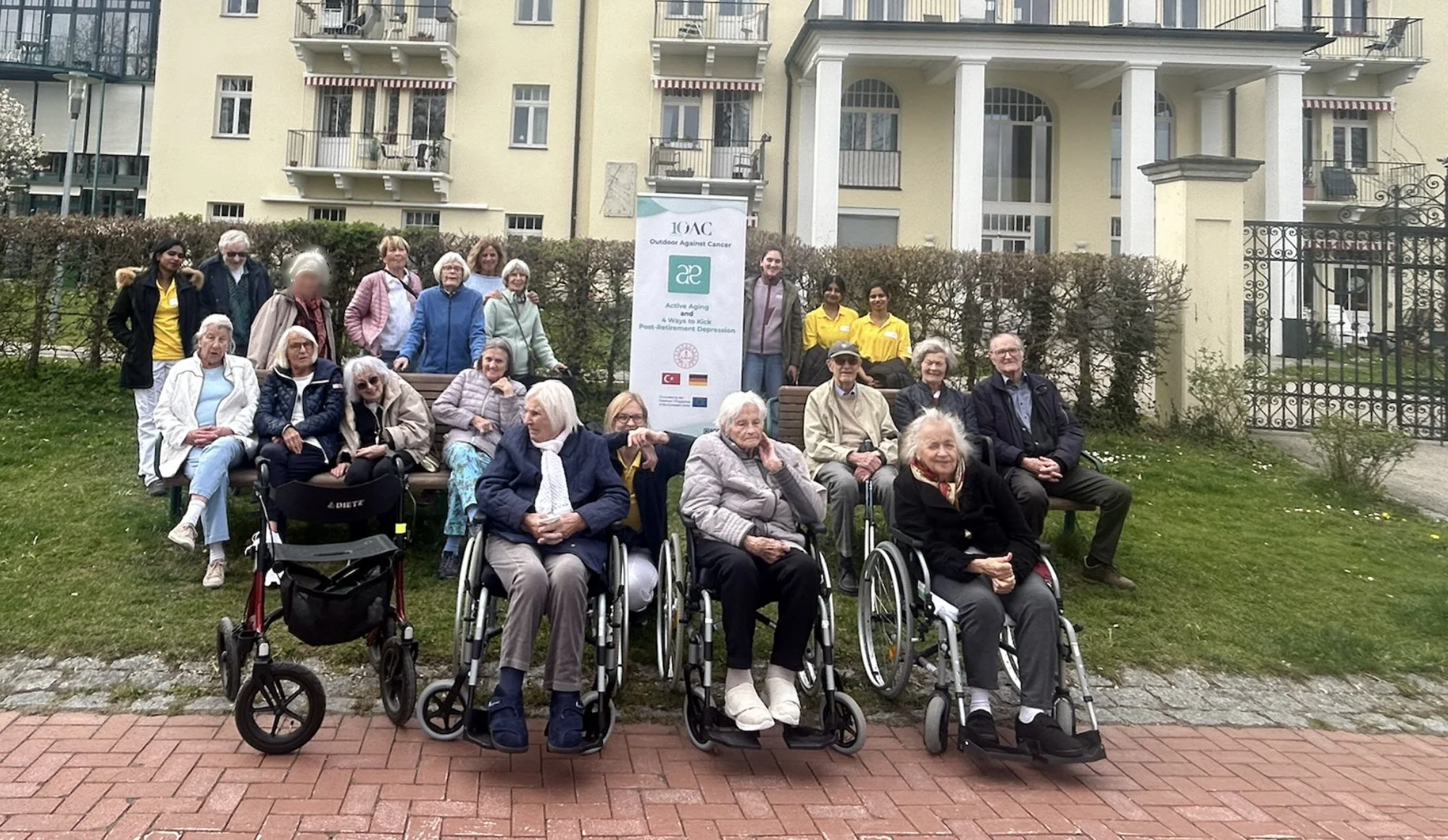
The first event focused on the theme of mindfulness, while physical activity was not neglected during this mindful spring hike. Around 20 residents and caregivers from the Diakonie Senior Citizens' Home in Schäftlarn participated. The group reflected a high level of diversity regarding physical abilities. Participants with and without walkers, as well as those with and without walking aids, were equally integrated, illustrating that adapted formats allow for active participation despite limited mobility.
Many of the seniors spoke of a lifelong connection to nature and physical activity. A central element was a guided mindfulness exercise. Under a chestnut tree, OAC certified trainer Lea Laciak guided participants to consciously experience their breathing and direct their senses toward their surroundings. The feedback revealed a remarkable range of perceptions. In addition to scents, acoustic impressions and emotional states were described. Statements such as “The air smells so soft today” illustrate the intensity of their perception and their connection to nature.
As the hike progressed, the group split according to individual stamina. One part returned to the facility via the same path, while a second group continued the activity in the forest - even some participants using walkers. Particularly impressive was a 95-year-old participant whose upright posture and high level of mobility serve as a prime example of the positive effects of an active lifestyle. Conversations regarding the participants' former professional lives clearly demonstrated that lifelong physical activity has exclusively positive effects on aging processes, such as mental presence, motivation, and physical stability.
Full-Body Activation: Mobilization, Balance, and Coordination
A few days later, the second meeting took place, this time focusing on physical mobility, balance, and coordination. Pleasingly, a group of about 15 women gathered once more; the majority had already participated in the mindful hike and awaited the planned program with joy and anticipation.
The group was generally quiet but highly focused and open to the exercises. Individual participants actively engaged by sharing their sensations during the movements, which enriched the exchange within the group. A particular highlight occurred toward the end of the session: when asked if there was still interest in coordination exercises, several participants responded with an enthusiastic "Yes!". Furthermore, one participant who usually relies on a walker was able to perform an exercise while standing, thanks to targeted support. The opportunity to move safely within this framework led to visible joy and a palpable boost in self-confidence.
The subsequent exercises provided not only visible challenges but also plenty of laughter and lively conversations about body awareness and lateral differences. The high level of acceptance for these activities was evident again at the conclusion: several participants were already asking eagerly about the next session, which was scheduled just two days later. This interest underscores the great openness and joy found in the program, as well as the potential of such low-threshold movement formats in the context of Active Aging and beyond.
Finding the Beat
The third and final event focused on rhythm, music, and movement. It was eagerly anticipated by the approximately 20 participants, many of whom were attending for the third time.
With well-known songs by Udo Jürgens, the start was easy and significantly more participants than usual were immediately ready to move while standing. With great enthusiasm and smiles on their faces, they clapped, swayed, and danced. This was followed by a rhythm exercise - an exciting but also challenging phase. While some participants were immediately involved and could successfully implement various rhythmic patterns, others found it a bit more difficult to find their "groove." However, this small challenge did not dampen the mood.
By the time "Auf der Mauer, auf der Lauer" (a German folk song) was played, the ice was completely broken; the group laughed, sang, and participated with full energy. At the participants' request, the end of the session was spontaneously replanned and culminated in a spirited dance performance by everyone involved. Classics by Udo Jürgens, Elvis Presley, and others provided a lively and emotional conclusion. Once again, the feedback spoke for itself: many participants wanted to know immediately when the next session would take place. The most frequent request: another event focusing on music and movement.
Looking Ahead
Beyond the events themselves, important impulses were set for the future. In discussions with the local coordinator, Ms. Fernandez, the idea was developed to adapt OAC’s 4x4 Training specifically for senior citizens' homes and make it a permanent part of the Active Aging approach. This next step is already in the planning stages.
Additionally, OAC is currently working on a poster that clearly summarizes the exercises from the second session. The goal is to provide residents with a simple way to integrate these movements into their daily lives independently, including a special focus on the role of breathing during each exercise.
These three events illustrate that bonding experiences arise primarily through shared activity - regardless of whether the point of entry is movement, music, or mindfulness.